Melting & Phase Relations in the Deep Earth
Mapping how rocks and metals melt and transform at the extreme conditions of planetary interiors.
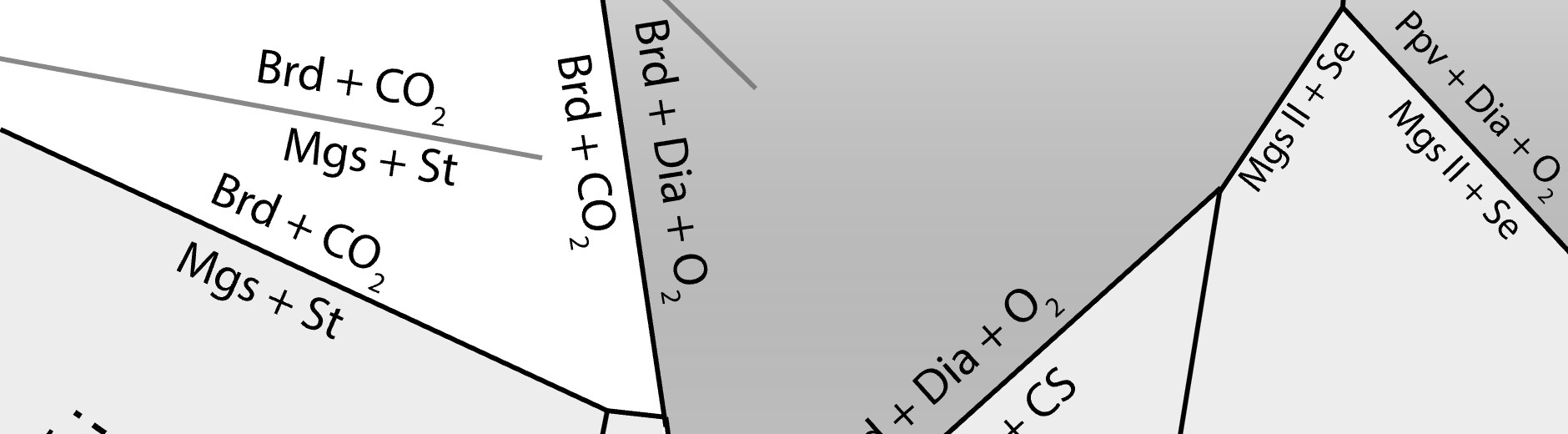
Knowing what melts, and at what conditions, is fundamental to understanding how planets differentiate, how their mantles convect, and how their cores evolve. This body of work — the largest in the group — uses laser-heated diamond anvil cells and multi-anvil presses to determine melting curves and phase diagrams for systems ranging from simple metals (Fe, Ni, Sn) and metal alloys (FeSi, NiSi, Fe–C, Fe–FeO, Fe–Fe₃C) to complex silicates (MgO–SiO₂, enstatite–magnesite, perovskite-bearing assemblages).
These experiments constrain temperatures at the core–mantle boundary, the composition of planetary cores, the depth at which magma oceans solidify, and the mineralogy of the lower mantle. Complementary thermodynamic modelling and ab initio calculations help extend the experimental results to conditions that remain beyond direct measurement.